
Bobcats in the backyard: what Calgary’s urban wildlife can teach us about keeping nature connected
November 2, 2026
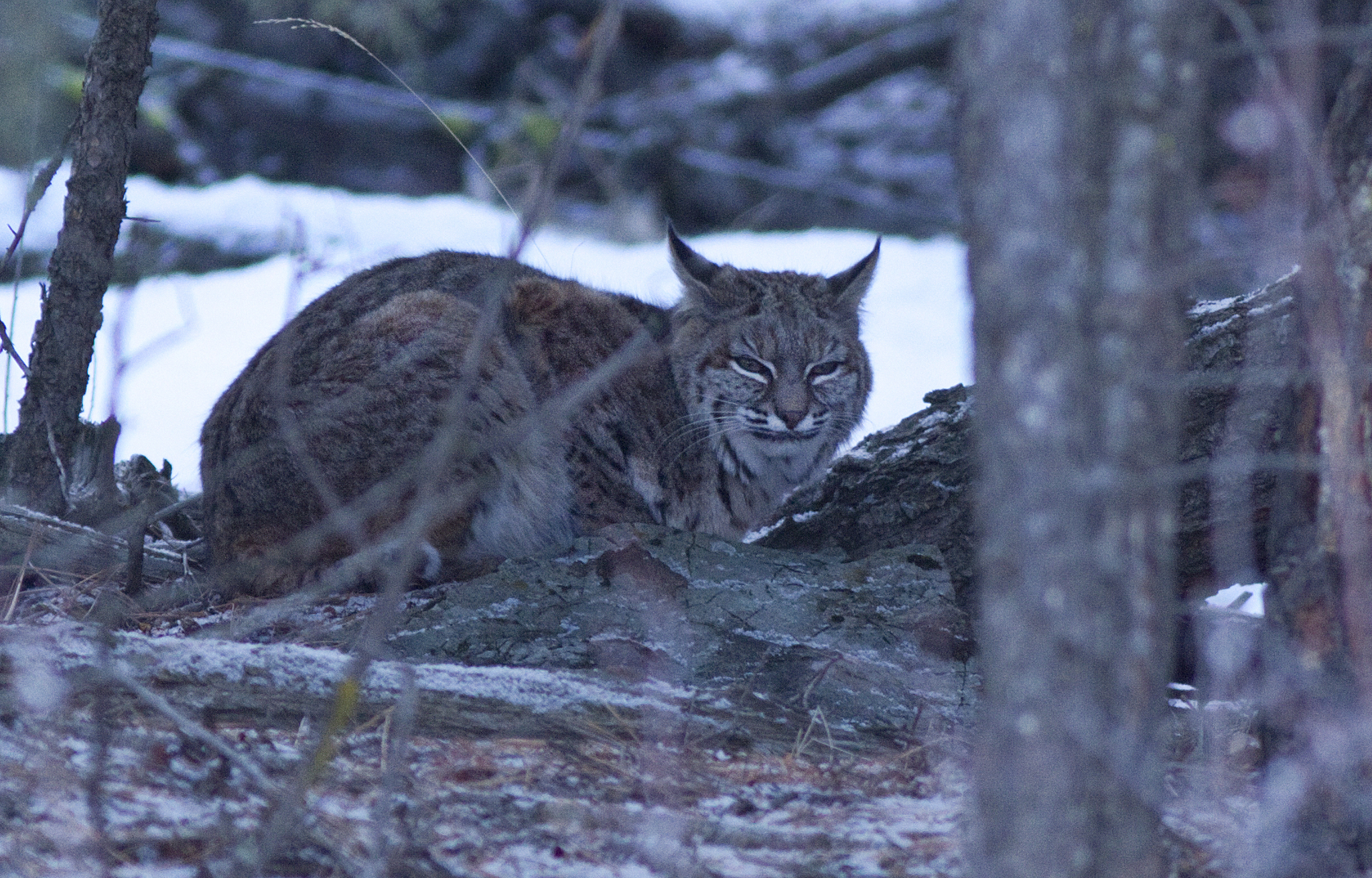
A surprise in the flowerbed
Picture working from a dining table in a Calgary neighbourhood, stepping into the backyard to check on a noisy squirrel, and coming face to face with a growling mother bobcat. That’s how writer Niki Wilson opens her new feature for Canadian Geographic, and the story only gets better from there: two bobcat kittens soon tumble out of the bushes to play on the patio furniture for the rest of the afternoon.
It’s a delightful scene, but it also points to something bigger. Wildlife is finding ways to live in and move through the places we’ve built. Whether that goes well, for animals and for people, depends a lot on whether our parks, green spaces, and the wilder areas around our communities stay connected.
A city that bobcats call home
Calgary’s bobcats have been on the move. Wildlife biologist Sara Jordan-McLachlan pored over trail camera photos and 15 years of sightings reported by residents and found that bobcats spread across the city from west to east between 2005 and 2020. Since then, they’ve made it across the busy Deerfoot Trail freeway and are now found citywide.
Her research drew on trail camera images from Nature’s Network, a program run by the Miistakis Institute in partnership with the City of Calgary to understand how wildlife travels through three major wildlife corridors in the city, the linked green spaces and waterways that let animals move safely from place to place. The cats tend to stick close to parks, school fields, and other green spaces, usually staying within about 200 m of them.
Bobcats aren’t alone. The article describes coyotes, foxes, raccoons, bats, deer, and even the occasional moose, bear or cougar making use of Canadian cities, from Whitehorse to Toronto. As one researcher puts it, our cities have created a new kind of biodiversity.
Why connections matter
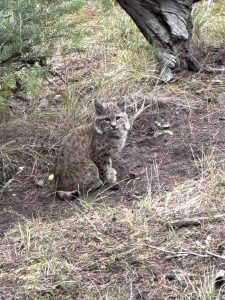
Bobcat in grass. Photo by Troy Davis, CC BY-NC.
The article makes a point that applies well beyond Calgary: wildlife does better, and runs into trouble with people less often, when the habitats it relies on are linked together. A park cut off by roads and buildings can leave animals stranded, while green spaces linked by creeks, ravines, and greenways let them find food, mates, and safe places to raise young.
Those animals give a lot back. Predators like bobcats and coyotes help keep rabbit, squirrel, and gopher numbers in check. Animals that travel long distances carry seeds across the city, helping plants stay healthy. Time spent near parks and watching birds or wildlife is also good for our own well-being.
The article notes that Calgary and Toronto have policies that look at how new development will affect wildlife movement before building goes ahead. Those policies don’t always win out, but collaboration helps: the Miistakis Institute, the City of Calgary, and neighbouring Rocky View County are working together to keep wildlife routes open across city and county lines.
Closer to home
The same story is playing out here in the Thompson-Okanagan. As our towns and cities grow, roads, highways, and new development can cut wildlife off from the places they need to reach.
That’s why Keeping Nature Connected exists. Thompson-Nicola Conservation Collaborative (TNCC) and Okanagan Collaborative Conservation Program (OCCP) work alongside First Nations communities, local governments, landowners, and conservation partners in the Thompson–Okanagan to identify and protect wildlife corridors, the linked lands and waters that keep wildlife, fish, and plants moving between our parks, green spaces, creeks, and the wilder grasslands and forests beyond our towns. Across the region, communities and Nations are already restoring these connections through projects like wildlife crossings, fish passage upgrades, and habitat restoration.
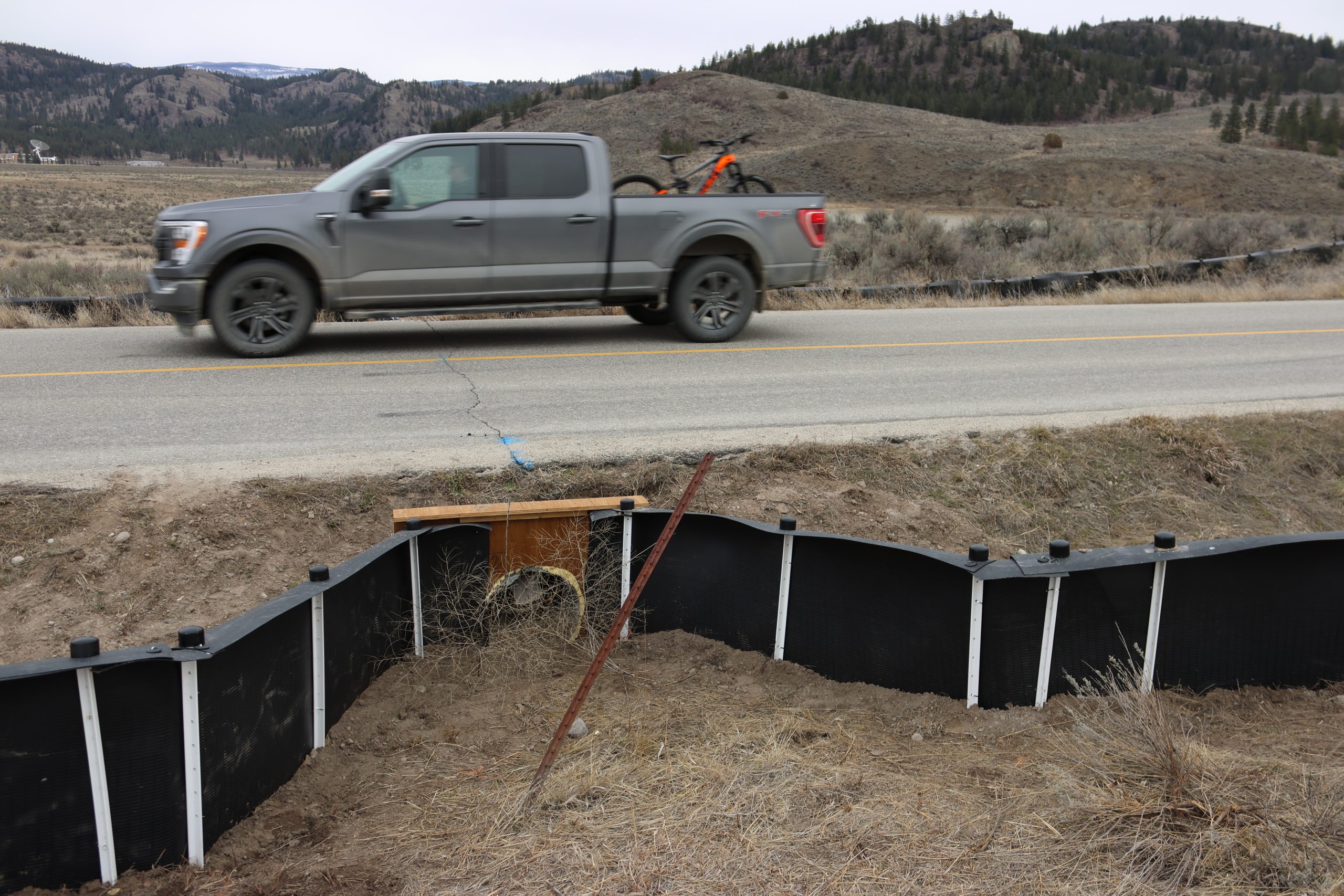
Culvert crossing, White Lake Basin, by A M Bezener, OCCP
It’s encouraging to see this thinking take hold locally too. The City of Kamloops has added TNCC’s corridor mapping to its Official Community Plan, the long-term plan that guides how the city grows, and OCCP’s corridor work is reflected in similar plans in the City of Kelowna and the District of Lake Country. Like in Calgary, real progress comes from neighbours working together across boundaries.
Sharing space with our wild neighbours
Living well alongside wildlife comes down largely to our own habits. Drawing on the advice in the article and Keeping Nature Connected’s tips, here are a few simple things anyone can do:
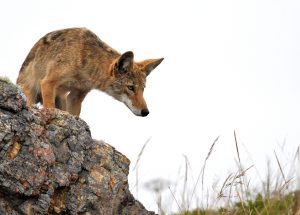
Coyote
- Keep dogs on leash. A Calgary monitoring project found that 72% of dogs caught on park cameras were off leash in on-leash areas, which can disturb wildlife without owners even noticing.
- Don’t feed wildlife. Human food, pet food, and spilled birdseed draw animals in, can make them less wary of people, and may harm their health.
- Tidy up fruit and garbage. Picking fallen fruit and securing bins removes easy meals that lead to conflict.
- Think twice about rodent poisons. When a bobcat or other predator eats a poisoned mouse or rat, the poison can make it sick too.
- Give animals space, especially in spring. A coyote following you near its den is usually escorting you away from its pups, not stalking you.
- Create backyard habitat. Native flowers, shrubs, and trees create small pockets of habitat, and connected yards and greenways help wildlife move more safely through our neighbourhoods.
For more ideas, from slowing down where wildlife cross the road to sharing your wildlife sightings, see how you can help.
Read the full story
Niki Wilson’s article, with photography by Colleen Gara, is well worth a read, from foxes stealing sneakers in Whitehorse to raccoons outsmarting our garbage cans. Read Love thy neighbour: The bobcats taking over Calgary’s backyards in Canadian Geographic.
Feature image by Alan Burger, CC BY-NC.